
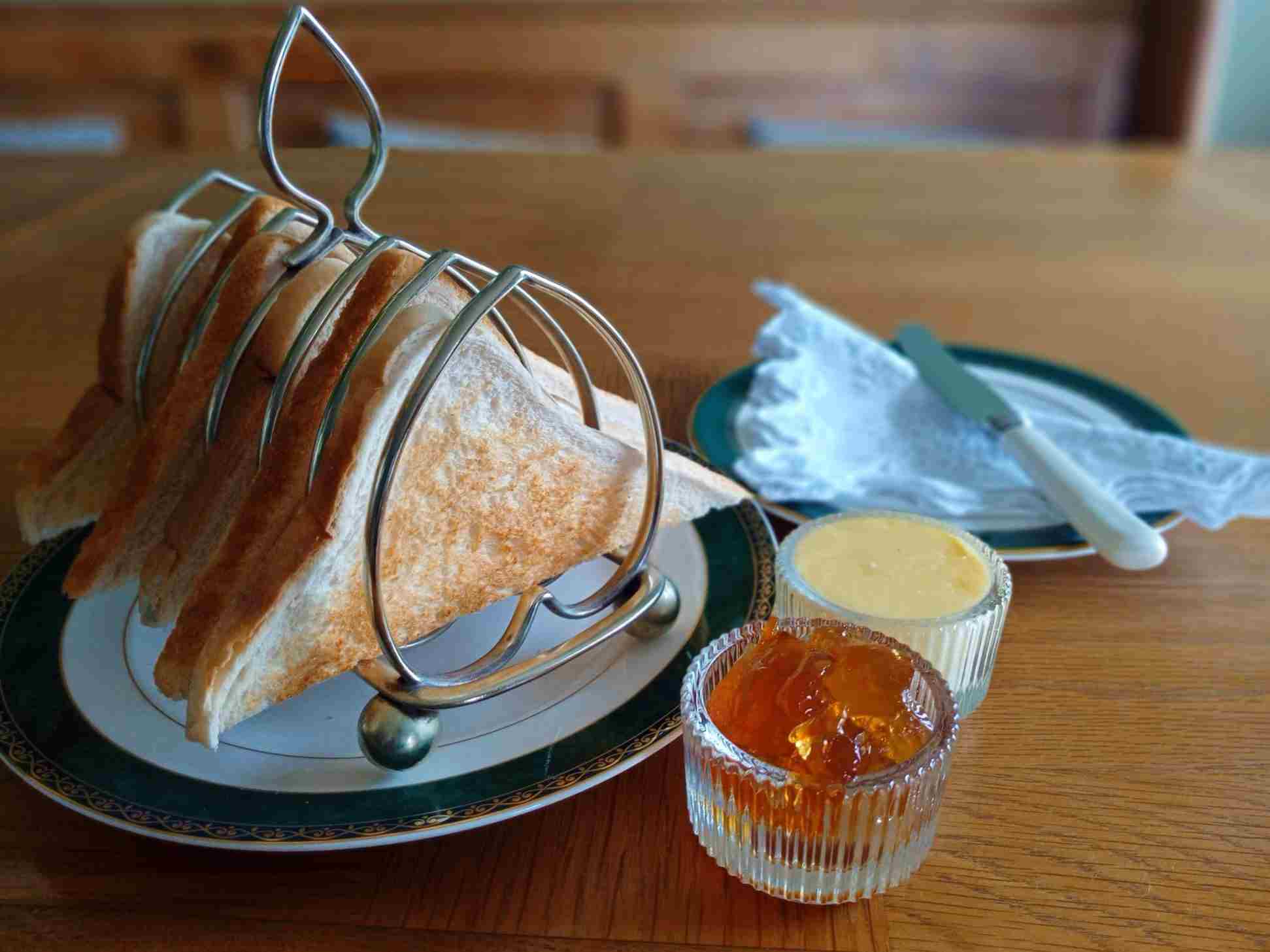
Call me old fashioned, but I do like a toast rack.
In the last 200 years, cookery books and household manuals took the making and serving of toast very seriously. In 1861 Mrs Beeton advised 'Never use new bread for making any kind of toast, as it eats heavy, and, besides is very extravagant. Procure a loaf of household bread about two days old; cut off as many slices as may be required, not quite ¼ in thickness; turn off the crusts and ragged edges, put the bread on a toasting fork and hold it before a very clear fire' and then she goes on to say that the answer, of course, is the implementation of “the toast rack, to enhance one’s breakfast experience.”
Thank heavens we don’t have to follow all of Mrs. Beeton’s advice and we make our toast in a toaster, but who wouldn’t want to enhance their breakfast with this superb invention?
I have read that they first appeared on the breakfast table around the 1780’s as part of the general refinement of dining customs amongst the middle classes. Upon reading this, I immediately checked the dates of my ancestry just to make sure that toast racks were around at the time that my great great grandfather was establishing Magee’s Commercial Hotel (Mannie’s to you and I) as the place to stay in Ardglass. Phew, yes they had been invented by the time John Magee was welcoming guests into his establishment, and his wife Margaret was cooking breakfasts.
I have three antique toast racks that adorn our breakfast table at Margaret’s Cottage. I do like crisp (never soggy) toast with real butter, home-made orange marmalade and a starched Irish linen napkin.
There’s something quite upstairs-at-Downton-Abbey about having breakfast from an antique silver toast rack……but something decidedly DOWNSTAIRS about cleaning it! Nevertheless although my lovely toast racks are fiddly to polish, it is a labour of love.
So look out that dusty old toast rack that you might have lurking in the back of a kitchen cupboard and why not use it this week? X